Ayurnava Hospital, Metro Station, Plot 59, near Sec 11, Dwarka, Delhi, 110075
Phone: 7042384500
Email: info@ayurnava.com
Map Directions: https://maps.app.goo.gl/b7rzEoMY4wuNEt4p6
Opening Hours: Mon – Sun: 08:00 AM to 08:00 PM

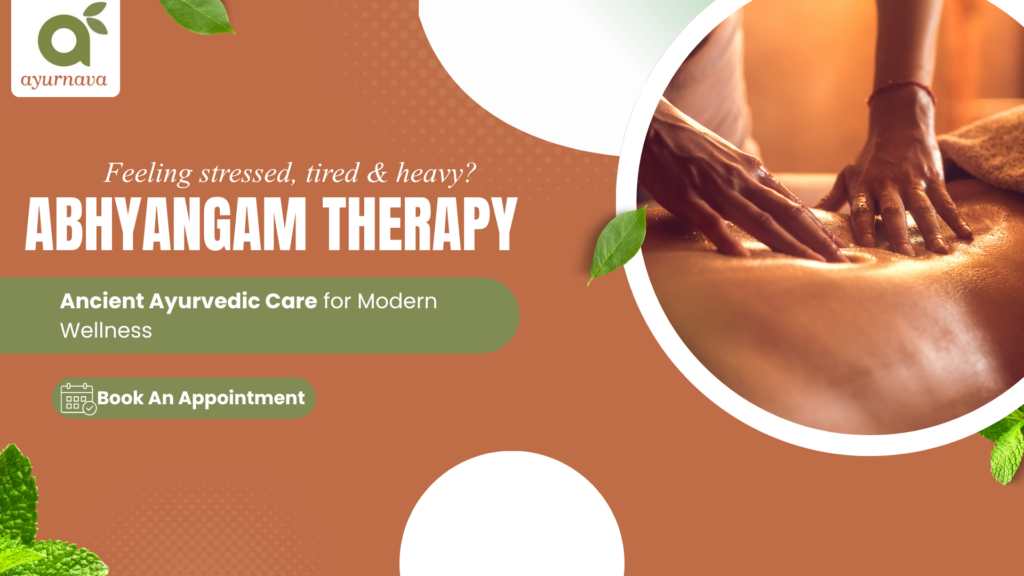
Warm medicated oil, classical Kerala technique, and a treatment plan built around your dosha — not a generic massage. Available at 6 clinics across Delhi NCR & Gurugram, including our NABH-accredited hospital in Dwarka.
Modern life leaves most of us carrying stress in our shoulders, disturbed sleep, and a body that never fully switches off. Abhyangam is one of Ayurveda's oldest answers to exactly this — a warm, medicated-oil massage designed not just to relax the body but to actively restore balance to the nervous system, circulation, and muscles.
Abhyangam (Abhyanga) is a synchronized, full-body Ayurvedic oil massage performed with warm medicated oil, using long strokes along the limbs and circular strokes over the joints and abdomen — typically 45–60 minutes. The oil is chosen based on your dosha (vata, pitta, or kapha) and the concern being treated, making it a customized therapy rather than a one-size-fits-all massage.
At Ayurnava Kerala Ayurveda, every Abhyangam session begins with identifying your dosha and current imbalance, because the oil, pressure, and pacing used for a vata-dominant person experiencing anxiety and insomnia is different from what's used for a kapha-dominant person dealing with sluggishness and joint stiffness.
Your practitioner reviews your health history and constitution (dosha) to select the right oil and technique.
Medicated oil is warmed to the right temperature so it penetrates the skin without discomfort.
45–60 minutes, head to feet, following classical stroke direction to support circulation and lymphatic flow.
A short rest lets the oil absorb, followed by a warm herbal steam or shower with a mild cleanser.
Abhyangam is a wellness and supportive-care therapy, complementary to — not a replacement for — medical treatment of diagnosed conditions.
Always consult an Ayurnava practitioner first if you have a diagnosed medical condition, to confirm Abhyangam is appropriate and identify any modifications needed.
May need to be avoided or modified for: fever or active infection, recent fractures or surgery, open wounds, severe cardiac or kidney disease, bleeding disorders or blood-thinning medication, and pregnancy (a specialized prenatal protocol applies). Our practitioners review your health history before your first session.
Yes. Abhyangam follows a fixed Ayurvedic sequence and stroke pattern, uses warm medicated oil chosen for your specific dosha, and is intended as a therapeutic treatment rather than purely a relaxation service. A regular spa massage typically doesn't customize oil selection to individual constitution or follow this classical protocol.
Abhyangam is a gentle, non-invasive therapy that's safe for most healthy adults, with minimal side effects when performed by a trained therapist. It should be avoided during fever, active infection, recent surgery, or with certain cardiac, kidney, or bleeding conditions. Rarely, someone may have a mild skin reaction to a specific oil, which is why informing your therapist of any allergies beforehand matters.
Many people report reduced stress and better sleep after Abhyangam, largely attributed to the calming effect of warm oil and rhythmic touch on the nervous system — particularly when the head and scalp are included in the session.
Abhyangam is commonly used as purvakarma — a preparatory therapy that softens tissues and mobilizes toxins before deeper Panchakarma detoxification treatments. It's also offered as a standalone therapy for general wellness, independent of a full Panchakarma program.
A single session offers relaxation and short-term relief. For an ongoing concern, practitioners commonly recommend a course of 7–14 sessions; for general wellness, a weekly session is a realistic long-term routine. Your Ayurnava practitioner will recommend a schedule based on your goals.
[Pricing varies by session length and the specific oils/protocol used — add your current pricing here, or state that pricing is confirmed after a brief consultation.]
Traditional basis: Abhyanga is described in classical Ayurvedic texts as part of daily self-care (dinacharya), practiced to help stabilize the doshas before they become imbalanced enough to cause illness.
Direction & technique: Strokes follow the direction of hair growth along the limbs, with circular motion reserved for joints and the abdomen — believed to support lymphatic drainage and ease joint stiffness specifically.
Oil selection by dosha: Vata types typically use warm, grounding oils such as sesame; Pitta types use cooling oils such as coconut; Kapha types use lighter, sometimes stimulating oils such as sunflower or mustard.
Contraindications: General — high fever, severe cardiac or renal disease, active bleeding disorders. Local — acute inflammation, open wounds, skin infections, recent fractures, severe varicose veins at the treatment site.
Ayurnava Kerala Ayurveda offers Abhyangam massage across six centres in Delhi NCR & Gurugram. Call your nearest clinic to book a consultation.
Experience personalized Ayurvedic oil massage, tailored to your body's constitution, at the Ayurnava clinic nearest you.