Ayurnava Hospital, Metro Station, Plot 59, near Sec 11, Dwarka, Delhi, 110075
Phone: 7042384500
Email: info@ayurnava.com
Map Directions: https://maps.app.goo.gl/b7rzEoMY4wuNEt4p6
Opening Hours: Mon – Sun: 08:00 AM to 08:00 PM

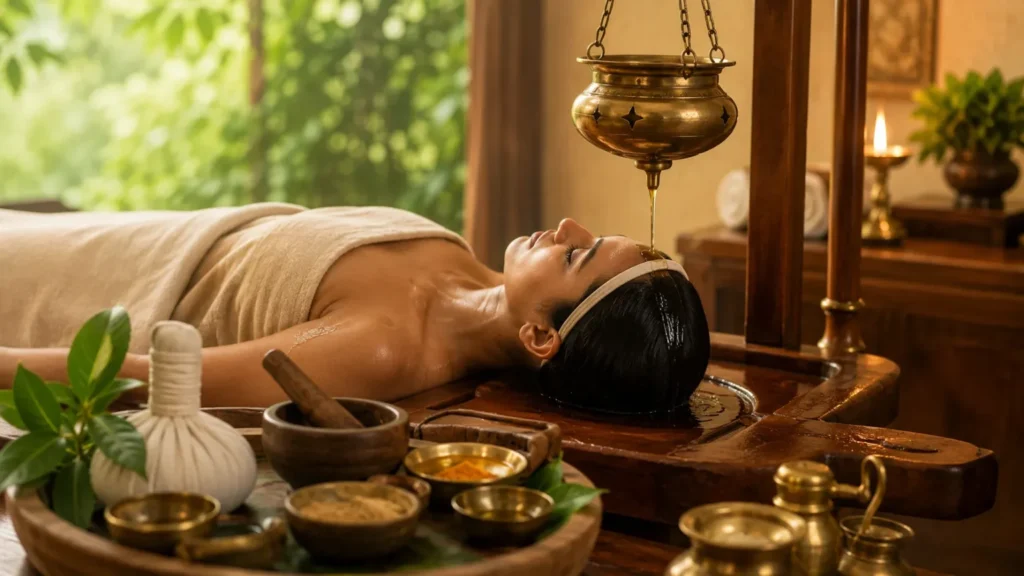
Panchakarma is Ayurveda's most comprehensive detoxification system — a structured program of preparatory, cleansing, and restorative therapies designed to remove deep-seated toxins and restore dosha balance. Available at 6 clinics across Delhi NCR & Gurugram.
Panchakarma ("pancha" = five, "karma" = actions) is the most comprehensive detoxification and rejuvenation system in classical Ayurveda — not one therapy, but a structured, multi-stage program tailored to your constitution and health goals. At Ayurnava, Panchakarma is offered as a supervised program, not an isolated spa package.
Panchakarma refers to five classical cleansing procedures — Vamana (therapeutic emesis), Virechana (purgation), Basti (medicated enema), Nasya (nasal therapy), and Raktamokshana (bloodletting/cupping) — administered after a preparatory phase (Purvakarma) of oil therapies and fomentation, followed by a structured recovery phase (Paschat Karma). Not everyone undergoes all five; your practitioner selects what's appropriate for you.
At Ayurnava, a Panchakarma program begins with a thorough consultation to understand your constitution, current imbalances, and health goals, since the specific combination and sequence of therapies is different for every individual — this is not a one-size-fits-all package.
Not everyone undergoes all five — your practitioner selects only the procedures relevant to your constitution, condition, and health goals.
A medicated purgation procedure that clears excess Pitta and accumulated toxins from the gastrointestinal tract, commonly used for Pitta-dominant conditions.
Herbal or oil-based enemas considered the primary therapy for Vata disorders, given Vata's association with the colon in classical Ayurveda.
Administration of herbal oils or powders through the nostrils to clear toxins from the head and neck region and support related conditions.
A supervised, medically-induced emesis procedure used for Kapha-dominant conditions, clearing excess Kapha from the upper respiratory and digestive tract.
A blood-purification procedure used selectively for specific Pitta-blood disorders, applied only when clinically appropriate.
Every Panchakarma program also includes Purvakarma (preparatory oil therapy and fomentation) before, and Paschat Karma (structured recovery) after, these main procedures — skipping either phase is considered to reduce both safety and effectiveness.
Your practitioner assesses your constitution, health history, and goals to design your specific Panchakarma program.
Preparatory therapies like Abhyangam and Swedana (oil massage and fomentation) loosen toxins and prepare the body.
The appropriate main cleansing procedure(s) — such as Virechana, Basti, or Nasya — are administered under supervision.
A structured diet and lifestyle recovery phase follows, allowing the body to rebuild and stabilize.
Ayurvedic Panchakarma Treatment is a wellness and supportive-care therapy, complementary to — not a replacement for — medical treatment of diagnosed conditions.
Always consult an Ayurnava practitioner first if you have a diagnosed medical condition, to confirm Ayurvedic Panchakarma Treatment is appropriate and identify any modifications needed.
Panchakarma's more intensive procedures are not suitable for everyone — a full evaluation is needed, and it should generally be avoided or heavily modified for: pregnancy, acute infections or fever, severe cardiac or organ dysfunction, active bleeding disorders, very frail or elderly patients without medical clearance, and recent major surgery — your practitioner will assess your specific eligibility before recommending any procedure. Our practitioners review your health history before your first session.
No — your practitioner selects only the procedures relevant to your constitution and condition; a full Panchakarma program rarely includes all five for any one person.
Programs typically range from about one to three weeks depending on the procedures involved and your specific plan, including preparation and recovery phases.
No — it requires careful evaluation and is not recommended during pregnancy, acute illness, or with certain serious medical conditions. Your practitioner will confirm your eligibility first.
Panchakarma is a supervised, individualized medical-style program following classical protocols with specific preparatory and recovery phases — quite different from a generic wellness spa package.
Some procedures can cause temporary tiredness or mild discomfort as part of the detox process — your practitioner monitors you throughout and adjusts as needed.
It's often used as part of a broader treatment plan for chronic conditions, but always as a complement to, not a replacement for, your ongoing medical care.
Panchakarma is described in foundational Ayurvedic texts as the definitive method for eliminating vitiated doshas from the body, distinct from Shamana (palliative) treatments that merely pacify imbalance without removing it.
The three-phase structure — Purvakarma, Pradhana Karma, and Paschat Karma — is considered essential; skipping preparation or recovery phases is traditionally regarded as reducing both the safety and effectiveness of the main procedures.
This is a wellness and supportive-care treatment, complementary to — not a replacement for — diagnosis and treatment by a qualified physician.
Ayurnava Kerala Ayurveda offers Ayurvedic Panchakarma Treatment across six centres in Delhi NCR & Gurugram. Call your nearest clinic to book a consultation.
Experience Ayurvedic Panchakarma Treatment, tailored to your body's constitution, at the Ayurnava clinic nearest you.