Ayurnava Hospital, Metro Station, Plot 59, near Sec 11, Dwarka, Delhi, 110075
Phone: 7042384500
Email: info@ayurnava.com
Map Directions: https://maps.app.goo.gl/b7rzEoMY4wuNEt4p6
Opening Hours: Mon – Sun: 08:00 AM to 08:00 PM

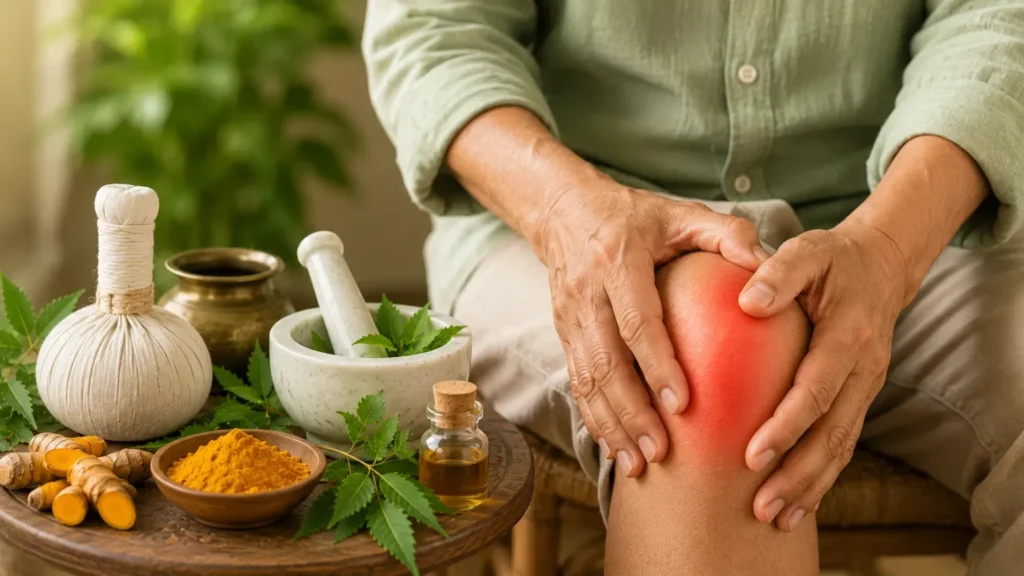
A structured Ayurvedic approach to osteoarthritis and rheumatoid arthritis, combining Panchakarma therapies, herbal medicine, and Vata-balancing care to ease joint pain and improve mobility. Available at 6 clinics across Delhi NCR & Gurugram.
Arthritis — whether osteoarthritis (Sandhivata) or rheumatoid arthritis (Amavata) — is one of the conditions Ayurveda has the longest, most detailed treatment tradition for. At Ayurnava, arthritis care combines therapies like Janu Basti and Patra Pinda Sweda with herbal medicine and diet correction, tailored to which type of arthritis and dosha imbalance is involved.
Ayurvedic arthritis treatment combines localized therapies (such as Janu Basti or Greeva Basti for the affected joint), herbal anti-inflammatory formulations, and dosha-correcting diet and lifestyle changes — Vata-balancing care for osteoarthritis-type wear, and Ama-clearing protocols for rheumatoid-type inflammatory arthritis.
At Ayurnava, your practitioner first identifies whether your arthritis pattern is more Vata-dominant (degenerative, osteoarthritis-type) or Ama-Vata dominant (inflammatory, rheumatoid-type), since the treatment approach differs meaningfully between the two.
Depending on whether your arthritis pattern is degenerative or inflammatory, your practitioner may combine one or more of these classical therapies with herbal medicine and diet correction.
Warm medicated oil is pooled over the affected knee, neck, or joint using a dough ring, delivering deep, sustained nourishment to reduce stiffness and pain.
Full-body oleation with Vata-pacifying oils improves circulation to joint tissue and eases the generalized stiffness common in osteoarthritis.
Used in select inflammatory (Ama-Vata) cases to clear accumulated toxins believed to drive joint inflammation, once digestion has been prepared for it.
A warm oil stream over the forehead that supports pain-related stress relief and better sleep for those with chronic joint discomfort.
Herbal oil administered nasally, sometimes used to support upper-body joint conditions such as cervical spondylosis.
Anti-inflammatory, joint-supportive herbs such as Guggulu, Shallaki (Boswellia), and Rasna are prescribed based on your specific arthritis pattern.
Not every patient receives all of these — your practitioner selects the combination and sequence based on whether your arthritis is degenerative or inflammatory, and its severity.
Your practitioner assesses your joint pain pattern, severity, and dosha involvement (Vata vs. Ama-Vata).
Therapies such as Janu Basti, Greeva Basti, or Patra Pinda Sweda are used on the affected joints as needed.
Anti-inflammatory, joint-supportive herbal formulations are prescribed based on your specific condition.
A dosha-specific diet and activity plan is given to reduce flare-ups and support long-term joint health.
Ayurvedic Arthritis Treatment is a wellness and supportive-care therapy, complementary to — not a replacement for — medical treatment of diagnosed conditions.
Always consult an Ayurnava practitioner first if you have a diagnosed medical condition, to confirm Ayurvedic Arthritis Treatment is appropriate and identify any modifications needed.
Please seek prompt medical evaluation rather than starting here alone if you have: a sudden hot, swollen, single joint (possible infection or gout flare), fever with joint pain, or significant unexplained joint swelling — these need medical evaluation first. Our practitioners review your health history before your first session.
Ayurveda offers a structured, long-established approach to arthritis using localized therapies, herbal medicine, and diet correction, aimed at reducing pain and improving mobility — best used alongside, not instead of, your doctor's care for diagnosed arthritis.
Osteoarthritis is treated as a Vata-dominant degenerative condition, focusing on lubrication and strengthening therapies, while rheumatoid arthritis is treated as an Ama-Vata inflammatory condition, focusing first on clearing Ama (toxins) before nourishing therapies.
No — never stop prescribed medication without your doctor's guidance. This treatment is offered as complementary supportive care.
This varies by condition and severity — your practitioner will recommend a course, often combining several weeks of localized therapy with an ongoing herbal and diet plan.
For early-to-moderate cases, some people experience enough improvement to delay or reduce dependency on surgery, but severe joint damage (Grade 4 osteoarthritis) often still needs surgical evaluation — your practitioner will be honest about what to expect.
Yes — Ayurveda considers diet central to managing both inflammatory and degenerative arthritis, and it's a core part of the treatment plan alongside therapies and herbal medicine.
Ayurveda distinguishes osteoarthritis (Sandhivata) — a Vata-dominant, degenerative joint condition — from rheumatoid arthritis (Amavata), where Ama (metabolic toxins) combines with aggravated Vata to cause inflammatory joint disease.
Classical treatment for Sandhivata emphasizes Snehana (oleation) and Basti-type therapies to lubricate and nourish joints, while Amavata treatment typically begins with Langhana (lightening/detox measures) to clear Ama before any oil-based therapy is introduced.
This is a wellness and supportive-care treatment, complementary to — not a replacement for — diagnosis and treatment by a qualified physician.
Ayurnava Kerala Ayurveda offers Ayurvedic Arthritis Treatment across six centres in Delhi NCR & Gurugram. Call your nearest clinic to book a consultation.
Experience Ayurvedic Arthritis Treatment, tailored to your body's constitution, at the Ayurnava clinic nearest you.