Ayurnava Hospital, Metro Station, Plot 59, near Sec 11, Dwarka, Delhi, 110075
Phone: 7042384500
Email: info@ayurnava.com
Map Directions: https://maps.app.goo.gl/b7rzEoMY4wuNEt4p6
Opening Hours: Mon – Sun: 08:00 AM to 08:00 PM

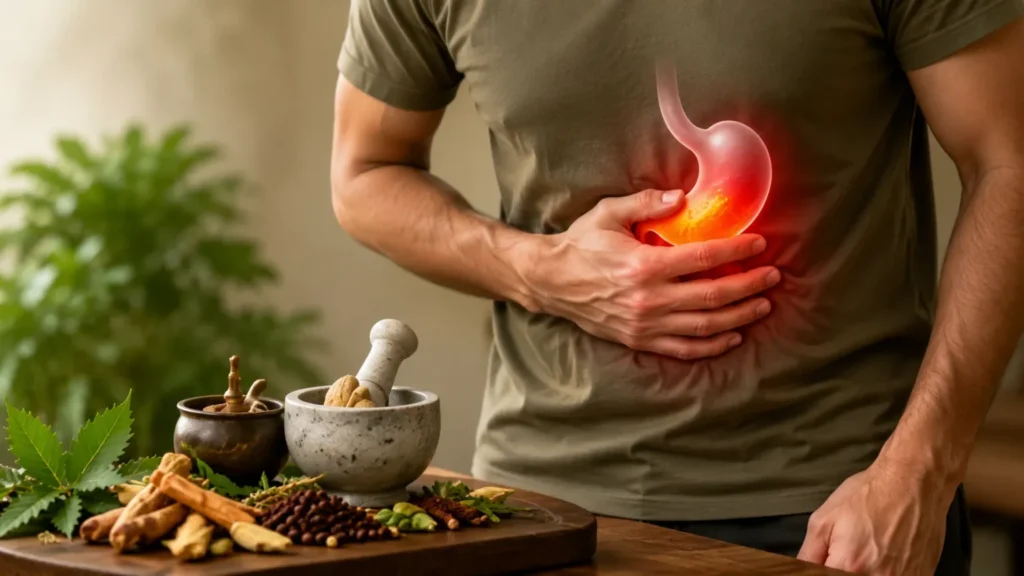
A root-cause approach to acidity, heartburn, and acid reflux — combining herbal medicine, Pitta-balancing therapies, and diet correction, not just short-term antacid relief. Available at 6 clinics across Delhi NCR & Gurugram.
Chronic acidity, heartburn, and acid reflux are among the most common complaints people bring to Ayurvedic practitioners — often after years of relying on antacids that only mask the discomfort. Ayurveda calls this condition Amlapitta, and treats it as a sign of aggravated Pitta dosha affecting digestion, not just an isolated stomach issue.
Ayurvedic acidity treatment addresses hyperacidity and acid reflux (Amlapitta) through a combination of Pitta-pacifying herbal formulations, dietary correction, and, where appropriate, Panchakarma therapies such as Virechana (therapeutic purgation) to clear excess Pitta from the system — aiming at lasting digestive balance rather than temporary symptom relief.
At Ayurnava, treatment begins with understanding your digestive pattern, trigger foods, and lifestyle factors, so the herbal formulations and dietary changes recommended are specific to your constitution rather than a generic anti-acidity protocol.
For chronic or Pitta-dominant acidity, your practitioner may recommend one or more of these classical therapies alongside herbal medicine and diet correction.
A supervised, medicated purgation that clears excess Pitta and accumulated toxins from the gut — considered the primary Panchakarma procedure for Pitta-driven conditions like chronic acidity.
A full-body massage with warm, Pitta-pacifying oils that eases the stress and tension which often intensify acid-related discomfort.
A steady stream of warm herbal oil poured over the forehead to calm the nervous system, addressing the stress and anxiety that commonly trigger flare-ups.
Herbal enemas that regulate Vata and support healthy bowel function, sometimes included when sluggish digestion accompanies acidity.
Herbal oil administered through the nostrils to help clear head-region toxins and support the mind-gut connection linked to stress-driven acidity.
Pitta-pacifying herbs such as Amalaki, Yashtimadhu (licorice), and Guduchi are prescribed to reduce acid production and support the gut lining.
Not every patient receives all six therapies — your practitioner selects the appropriate combination after reviewing your constitution, severity, and health history.
Your practitioner reviews your symptoms, diet, and lifestyle to identify your Pitta imbalance and its triggers.
Pitta-pacifying herbal formulations are prescribed to reduce excess acid and support healthy digestion.
For chronic or severe cases, therapies like Virechana may be recommended to clear excess Pitta from the system.
A personalized diet and routine plan is given to prevent recurrence, not just manage flare-ups.
Ayurvedic Acidity Treatment is a wellness and supportive-care therapy, complementary to — not a replacement for — medical treatment of diagnosed conditions.
Always consult an Ayurnava practitioner first if you have a diagnosed medical condition, to confirm Ayurvedic Acidity Treatment is appropriate and identify any modifications needed.
Please seek immediate medical evaluation rather than starting here alone if you have: severe or worsening chest pain, vomiting blood or coffee-ground material, black or tarry stools, unexplained weight loss, or difficulty swallowing — these need prompt medical evaluation to rule out serious conditions. Our practitioners review your health history before your first session.
Ayurveda attributes chronic acidity (Amlapitta) mainly to aggravated Pitta dosha, often triggered by spicy or oily food, irregular eating habits, and stress.
No — never stop prescribed medication without your doctor's guidance. Ayurvedic treatment is offered as a complementary, root-cause-focused approach alongside your existing medical care.
Many people notice reduced frequency of symptoms within a few weeks of following the herbal and dietary plan, though chronic cases may need a longer, structured course.
No — many cases are managed well with herbal medicine and diet correction alone. Panchakarma therapies like Virechana are reserved for chronic or more severe cases, based on practitioner assessment.
Diet correction is central to Ayurvedic acidity management, but is usually combined with herbal formulations for more effective and lasting relief.
Please share your complete medication history with your practitioner so any herbal formulations prescribed are safe to use alongside what you're already taking.
Ayurveda classifies chronic acidity as Amlapitta — a condition of aggravated Pitta dosha affecting Agni (digestive fire), leading to excess acid production and the classic symptoms of heartburn and sour belching.
Classical treatment follows a Pitta-pacifying approach: cooling, soothing herbs and foods, combined with Panchakarma therapies like Virechana in more entrenched cases to clear excess Pitta systemically rather than only locally.
This is a wellness and supportive-care treatment, complementary to — not a replacement for — diagnosis and treatment by a qualified physician.
Ayurnava Kerala Ayurveda offers Ayurvedic Acidity Treatment across six centres in Delhi NCR & Gurugram. Call your nearest clinic to book a consultation.
Experience Ayurvedic Acidity Treatment, tailored to your body's constitution, at the Ayurnava clinic nearest you.